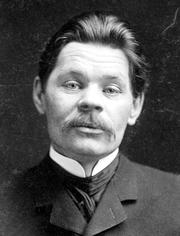
Максим Горький
Gorky, Maxim or Maksim [Rus.,=Maxim the Bitter], pseud. of Aleksey Maximovich Pyeshkov, 1868-1936, Russian writer. Gorky is considered the father of Soviet literature and the founder of the doctrine of socialist realism. Instilled by his grandmother with a love of romantic tales and great sympathy for mankind, Gorky began a nomadic life at 12, wandering the Volga area. Since the czar's schools were closed to peasants, he educated himself, an experience he describes in My Universities (1923). He held dozens of menial jobs, publishing his first story in 1892. Gorky then became a journalist and married a colleague on the Samarskaya Gazeta. His articles exposed local corruption and he soon lost his job. In 1898 Gorky's collection Sketches and Stories was published by a radical press and the author was an immediate sensation. These romantic tales concern the vigor and nobility of the Russian peasants and workers. About 1900 he turned to writing novels of social realism. Of these, Mother (1906) had the greatest impact on Soviet literature. Describing the awakening of revolutionary feeling in an ill-treated peasant woman, it became the prototype of the revolutionary novel. At this time Gorky became close friends with Leo Tolstoy and Chekhov, about both of whom he later wrote superb Reminiscences (tr. 1946). Gorky donated most of his income to the revolutionary movement. He was arrested frequently but treated carefully because of his tremendous popularity. The czar rescinded his election to the Academy of Sciences in 1902, whereupon Chekhov and Korolenko resigned in protest. Gorky wrote 15 plays, two of which, heavily censored, were enormously successful at the Moscow Art Theatre. One of them, The Lower Depths (1902), a study of the wretched lives of derelicts, remains a classic. His plays, at first modeled on Chekhov's, emphasized characterization over plot. After the failure of the 1905 revolution, in which he took part, Gorky sought to raise funds for the movement abroad. Following an initial triumphant reception in the United States (1906), he was insulted and mistreated there because his traveling companion was a woman who was not his wife. Settling in Capri (1906-13), he set up a Bolshevik propaganda school before he returned to Russia in 1914. Although philosophically at odds with Lenin, Gorky was able to extract from him aid for many intellectuals and artists in an era of intellectual restriction. Exhausted from his work as head of the State Publishing House and by bouts with tuberculosis, he sought rest abroad (1921) and returned in 1928. His final, unfinished work, often considered his masterpiece, is The Life of Klim Samgin (1927-36), a panoramic four-volume novel of Russian social conditions from 1880 to 1917. Gorky's death at 68 has been ascribed to assassination by poison, perpetrated according to one view by an anti-Soviet group. Gorky's work was remarkable for its vitality and optimism. It revealed, within its devotion to realism, a strong poetic strain and an eternal passion for justice. By the example of his work and life and by his literary criticism Gorky exerted a profound influence on Soviet thought. Most of his works have been translated. Columbia Encyclopedia
Books
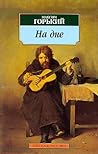
На дне
1902
ISBN 9785352016893
50 шедевров мировой литературы
2022
ISBN 9780880030366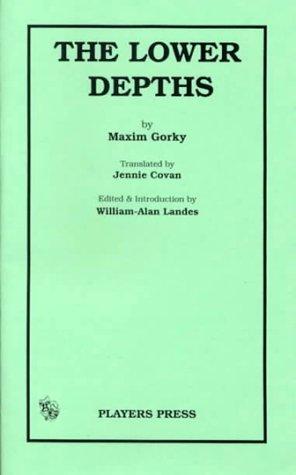
Na dne
ISBN 9780887348150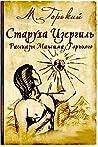
Старуха Изергиль
1894
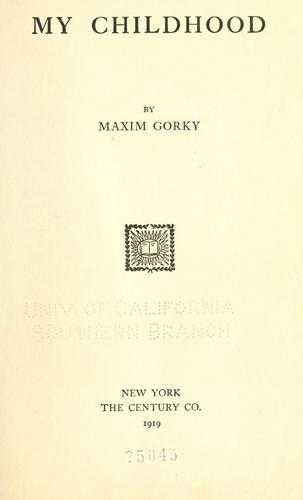
Detstvo
1915
ISBN 9785050005113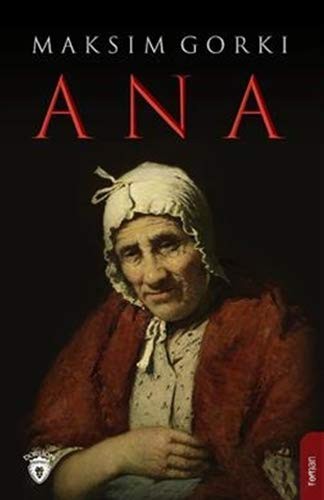
мать
2005
ISBN 9786054985869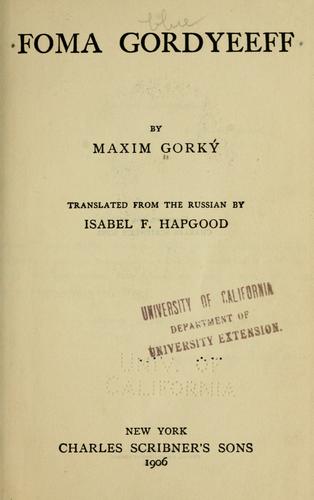
Фома Гордеев
1901
ISBN 9781412103497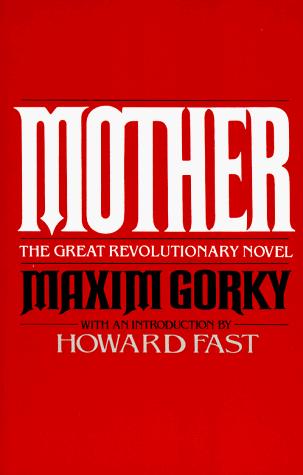
Mother
1907
ISBN 9781374986725
Zhiznʹ nenuzhnogo cheloveka
1908
ISBN 9780900948503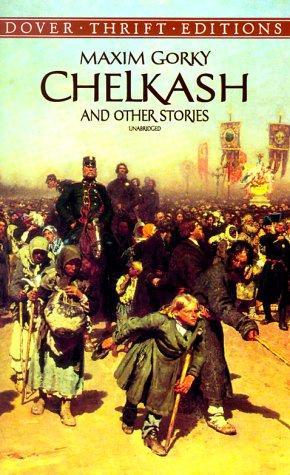
Chelkash and Other Stories
1915
ISBN 9780486159126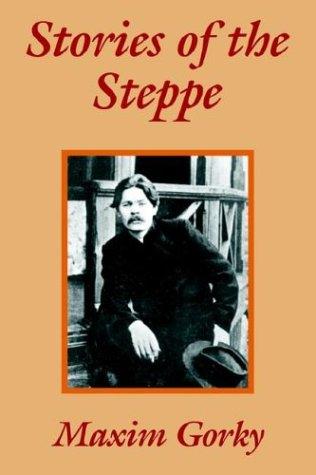
Stories of the steppe
1918
ISBN 9781410205728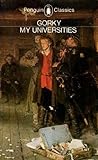
Moi universitety
1923
ISBN 9780140182866
Delo Artamonovykh
1925
ISBN 9780898759808
Bystander
1930
ISBN 9780766197657
V li͡u︡di͡a︡kh
1933
ISBN 9780140182842
Selected Short Stories
1950
ISBN 9788187075509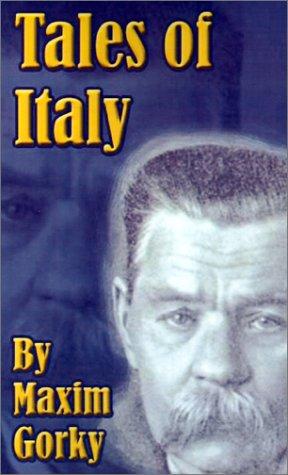
Tales of Italy
1950
ISBN 9781589635272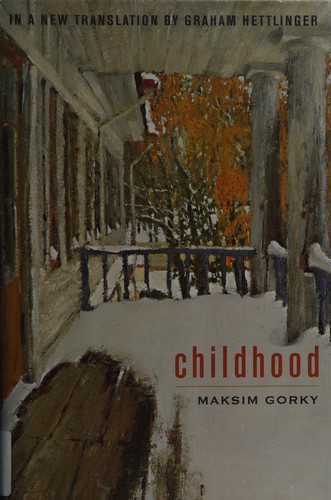
Childhood
1950
ISBN 9788182521292
A sky-blue life
1961
ISBN 9780451502087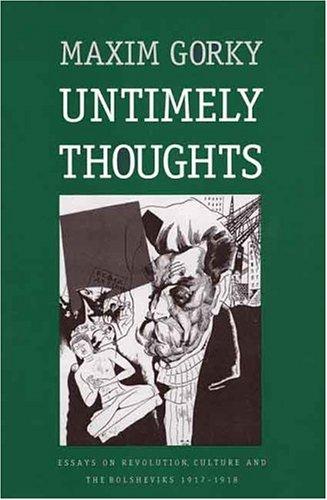
Untimely thoughts
1968
ISBN 9780300060690