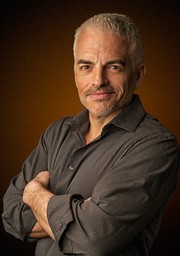
Neely Tucker
Neely Tucker was born in Holmes County, Mississippi, then the poorest county in the poorest state in America, in 1963. He has since worked in more than sixty countries or territories across the world and currently writes for The Washington Post’s Sunday Magazine. His memoir, “Love in the Driest Season,” was named one of the best 25 Books of 2004 by Publisher’s Weekly, the American Bookseller’s Association, the New York City Library and won numerous other awards. A seventh-generation Mississippian, he attended Mississippi State and the University of Mississippi, graduating magna cum laude from the latter, and was named as the University’s top journalism student. In college, he started writing for The Oxford Eagle as their “Yalobusha County correspondent,” which is perhaps the best job title any one has ever had. It was the smallest daily newspaper in Mississippi, and as such he covered everything from high school sports to county commission meetings to homicides to the Watermelon Queen festival. After college, he worked at Florida Today, Gannett News Service and the Miami Herald, all in a four-year span. Moving to the Detroit Free Press, he lived in a loft above a downtown pizzeria, froze in the winters, and was named to run the paper’s European Bureau in early 1993. Based in Warsaw, Poland, he datelined from forty-eight countries in forty-eight months. He principally reported on the war in the former Yugoslavia, but also covered violent episodes in Armenia, Israel and the West Bank, Lebanon, Iraq and several former Soviet provinces. The reporting on these entailed hiring a Russian helicopter to fly into Ushguli, Georgia, a mountain area so remote it was cut off from the rest of world during the winter months; walking across an airport tarmac in Italy to hitch a ride on a U.S. Apache attack helicopter; walking through the foothills of the French/Italian Alps with a pair of illegal Romanian clandestines; sailing with whale hunters in Norway; examining the remains of Auschwitz; and, like everybody else in Sarajevo, running from sniper and mortar fire during the Bosnian war. In 1997, he moved to the paper’s Africa bureau, based in Zimbabwe. He reported from more than fifteen countries across the continent in three years, including covering civil wars or violent uprisings in Rwanda, Burundi, the Democratic Republic of Congo, Ethiopia, Uganda, Sierra Leone and Liberia, as well as the U.S. Embassy bombing in Kenya. He was beaten by a mob in Kinshasa and, while covering public executions in Kigali, was saved from another mob beating by Rwandan Army officers. At home in Zimbabwe, the country was collapsing under the weight of the Mugabe regime and the AIDS epidemic. These war experiences, and the adoption of his gorgeous elder daughter from a state-run orphanage in Harare, provided the basis of Driest Season. They also intrigued Elmore Leonard, a friend in Detroit, to use him as the basis and namesake for a foreign correspondent in “Cuba Libre.” Since 2000, he has worked for The Washington Post. He has covered the U.S. District Court in Washington and its appellate division, generally seen as the nation’s number two court beneath the U.S. Supreme Court. His assignments include covering anthrax and terrorism after 9/11, the 2004 tsunami in Southern Asia and the fate of returning prison inmates. He’s balanced these rough-hewn assignments over the years with reporting on the arts. He hung out with Bo Diddley at his home in rural Florida and knocked back moonshine with blues legend Buddy Guy at his club in Chicago. In Europe, he wrote about American jazz exiles in Paris such as Steve Lacy and Steve Potts. At a recording studio on a snowy night in New York in the mid 1990s, he sat with Abbey Lincoln and Nellie Monk while the former recorded one of her legendary late-in-life discs,and he and the latter drank cognac and discussed the problem of split ends in hair care. He later had a three-hour lunch with Lincoln, which left him too…
Books
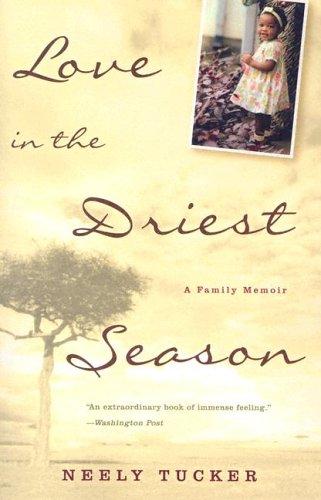
Love in the Driest Season
2004
ISBN 9785551289593