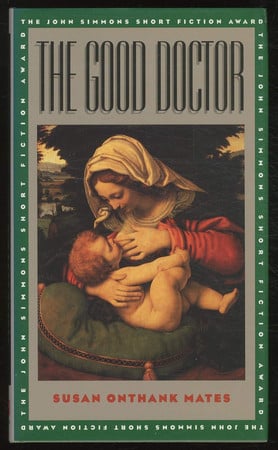
From Library Journal The most vivid and affecting story in this uneven collection is "These Days," a heartrending sob from an aging doctor in agnostic despair over the futile battle against AIDS. He recalls victories waged with penicillin in the days when science could be counted on for a cure. "I'm older now," he says. "My goals are thin." Another good piece is the title story: After 15 years in Tanzania, Dr. Helen van Horne returns to head a hospital in the South Bronx swept by a bizarre "wave of deaths" that claims doctors, maintenance workers, and patients. When van Horne sleeps with a handsome but less than competent student, she feels like a "sexual vampire," but the deaths cease. There's a lot of blood and dying here, some of it artificial drama that pushes the "poignant" button, as when a doctor thinks of a dying cancer patient while washing her newborn's diapers. But Mates, a practicing physician, is capable of brilliant conciseness: following her fourth miscarriage, Shadee "sank weighted by Oreos and grief." Winner of the 1994 John Simmons Short Fiction Award, this title is recommended for most collections. Ron Antonucci, Hudson Lib. & Historical Society, Ohio Copyright 1994 Reed Business Information, Inc. Product Description Many of Mates' characters have experienced some sort of cultural dislocation. In "Theng", refugees from Cambodia living in Providence, Rhode Island, struggle to maintain their dignity in the face of despair and the bittersweet memories of their former home. In "Shambalileh," a Persian woman unable to have children with her American husband, is forced to reexamine her status both as wife and as foreigner. Unifying these incredibly diverse stories is the brave honesty with which the characters confront the tenuousness of their situations. For the most part, they share the tenacity of the woman in "Shambalileh," who "with great caution ... began to imagine the rest of her life." The central characters in several stories are doctors, whose candid explorations of the vast moral implications of medical practice make of their lives a sort of psychic battleground between good and evil. In "The Good Doctor", a doctor torn between her dedication to medicine and her own requirements as a human being - what many of us might call her weaknesses - arrives at an intriguing conclusion. An intern in "Ambulance" risks her own well-being to save the life of a victim of gang violence. The twelve stories in this collection are powerful and durable. The debate between good and evil is so intense that the daily experiences of Mates; characters, transformed and reorganized, become psychic quests. Mates takes us back to the fundamental question that is the fountainhead of all serious fiction: how should we live? From Publishers Weekly At the heart of this debut story collection, winner of the 1994 John Simmons Short Fiction Award, are men and women, many of them medical workers, struggling to be good parents, honorable workers and virtuous people. In "Ambulance," a medical student is awakened to the frailty of life when she unexpectedly must escort a dying patient on a harrowing ambulance ride through the Bronx. In "Sleep," a doctor and his wife practice tough love in order to treat their four-year-old daughter's insomnia. In the title story, a woman who once ran a clinic in Tanzania finds her new position at a Bronx hospital to be an even tougher moral battleground. And in "These Days," the most poignant tale of the 12 presented here, an elderly doctor of infectious diseases confronts the age of AIDS. At times, Mates etches events only slightly or hatches contrived endings, and her writing can suffer from faux-Kerouac excess ("I was the American girl righteousness rolled off me a mighty stream I rose from my desk Peter Pan Collar angel wings...."), but the yearning of nearly all her characters to do the right thing gives the collection an appeal that makes it a kind of experimental complement to that current power
Rummaging the shelves…
Loading reviews…