Publisher, ISBN & more
- Publisher
- Yale University Press
- ISBN
- 9780300168570
About this book
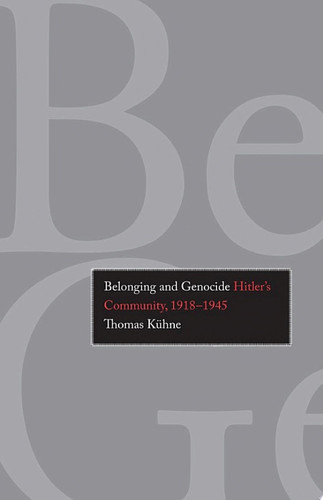
German society before World War I was "atomized", divided along class, religious, political, and other lines. The Great War created an illusion of "trench unity", as well as a myth that only war would unite the nation. In its effort to forge a German "Volksgemeinschaft", the Nazi dictatorship felt it was necessary to invent a mortal enemy whose image could unite the Germans. Given Nazi racist thought, the Jews were chosen to be the enemy. The myth of the Jewish enemy, bolstered by the Nazi repressive machine, helped to unite the Germans; later, during the war, it made them accomplices in the Holocaust, concerning which they had some, albeit vague, knowledge. Nazi indoctrination helped SS and Wehrmacht men perceive their anti-Jewish crimes as "revenge" or "retaliation measures". On the other hand, the sense of complicity with the Nazi genocide (either active, as in the case of the German military in the East, or passive, as in the case of the non-combatant majority in the Reich) cemented the German nation, created a brotherhood of crime, and in 1943-45, when defeat was imminent, helped to stiffen German resistance to the Allies. Toward the end of the war, many Germans, both the military and civilians, knew of the Nazi crimes and felt ashamed about them; however, their shame almost never drove them to resist the Nazi regime.
Similar books
Rummaging the shelves…
Reviews
Loading reviews…