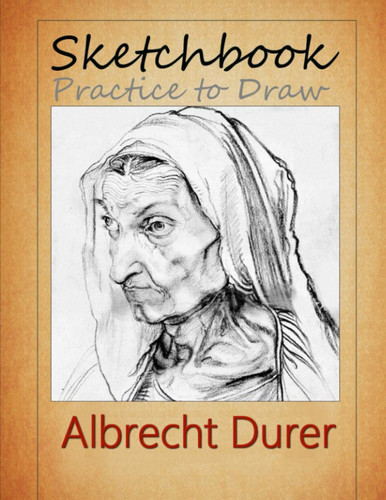
About this book
There are about a thousand (Julia Bartrum says about 970) of Durer's drawings: landscapes, portraits, sketches of people, animals, and plants. Evidence of how carefully the artist treated the drawing, is the fact that even his student works have been preserved. Durer's graphic heritage, one of the largest in the history of European art, is comparable in volume and importance with that of Da Vinci and Rembrandt. Free from the client's arbitrariness and his desire for the absolute, which brought a share of coldness to his paintings, the artist was most fully disclosed as a creator in the drawing.Durer tirelessly practiced the layout, the generalization of parts, the construction of space. His animalistic and botanical drawings are distinguished by the high skill of execution, observation, fidelity to the transfer of natural forms characteristic of a naturalist scientist. Most of them are thoroughly elaborated and represent complete works, however, according to the custom of the artists of that time, they served as supporting material: Durer used all his study pieces in engravings and paintings, repeatedly repeating the motives of graphic works. At the same time, Dürer had transferred almost nothing from his truly innovative findings made in landscape watercolor to his paintings.Durer's drawings were made with different materials, often he used them in combination. He was one of the first German artists who worked with whitewash brush on colored paper, popularizing this Italian tradition.In 1523-1528, Dürer published the theoretical treatises "A Guide to the Measurement of the Circular and Linear" and "Four Books on Human Proportions", which incorporated the conclusions he came up with as a result of the study of proportions and became the basis for a guide to teaching drawing. Most of his drawings were in silver pencil, brush, ink, pen, and charcoal.
Similar books
Rummaging the shelves…
Reviews
Loading reviews…