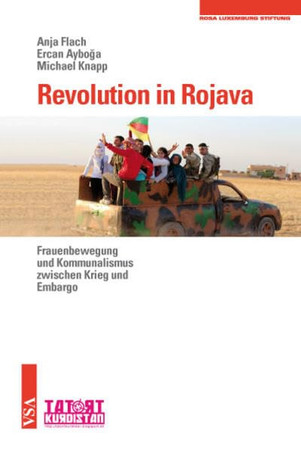
Revolution in Rojava
Frauenbewegung und Kommunalismus zwischen Krieg und Embargo ; eine Veröffentlichung der Rosa-Luxemburg-Stiftung in Kooperation mit der Kampagne Tatort Kurdistan
2015 · 350 pages
About this book
On July 19, 2012, the revolution of Rojava started in Kobanî. Under the initiative of the Western Kurdistan People's Council (MGRK) the population drove the Syrian Baath regime away largely bloodlessly. While the rest of Syria sank into civil war, Rojava was increasingly pointing to a third way beyond the Baath regime and an opposition sponsored by the West, Turkey and the Gulf States. Thus, the Kurdish freedom movement was faced with the challenge of building a unique project in the Middle East, based on democracy, gender equality and ecological principles. As it organised itself on the principle of democratic autonomy, the State entity became superfluous and all forms of nationalism were disowned. Since then, the population organized itself along a Soviet-like system. The project is threatened by reactionary forces such as the terrorist organization Islamic State. How will this project stand in the face of a 60-year dictatorial domination, a Turkish embargo and an escalating war? How are the Rojava principles of gender liberation and political participation of all ethnic and religious identities actually implemented? How are these approaches interpreted in the economy, the environment and education? Does this project offers prospects for a solution to the problems of the Middle East?
Similar books
Rummaging the shelves…
Reviews
Loading reviews…